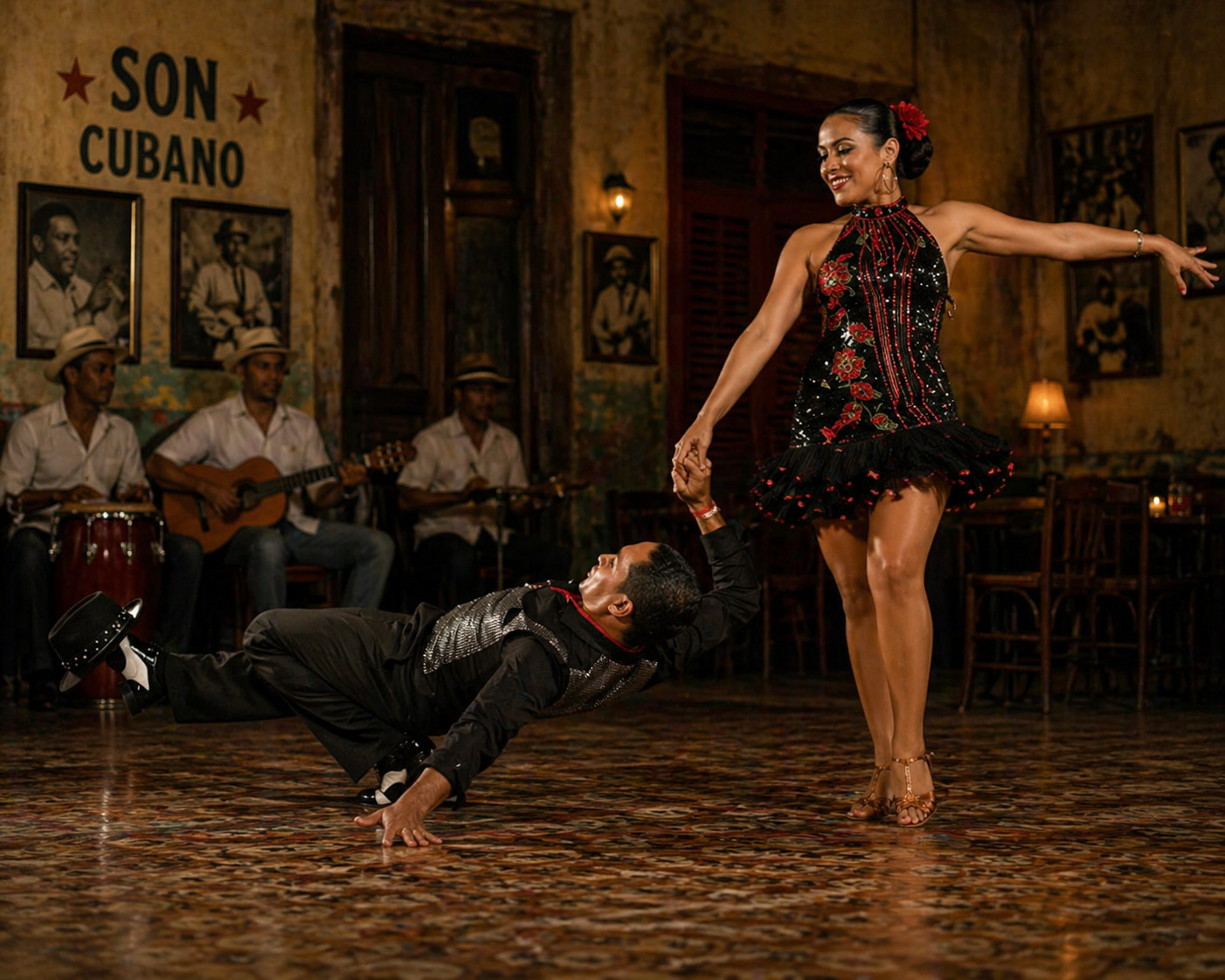
The story of Cuban dance begins far from the dance floors we know today. Before salsa, before casino, there was Son — a rhythm born in the eastern mountains of Cuba that slowly made its way into the heart of the cities.
From humble gatherings to vibrant urban salons, Son became the foundation of modern Latin dance.
🌄 Roots in Eastern Cuba
Son originated in the rural regions of Santiago de Cuba and the Sierra Maestra.
It was created by a blend of:
- Spanish melodies 🎸
- African rhythms 🥁
This fusion gave birth to something unique — a sound that was both structured and deeply expressive.
In those early days, music was simple:
- tres guitar
- bongó
- maracas
- claves
And the dance?
Natural, grounded, and full of sabor.
🏙️ The Journey to the City
As people migrated from the countryside to cities like Havana, Son traveled with them.
At first, it wasn’t welcomed.
Urban elites saw it as:
- too rural
- too raw
- too “popular”
But the rhythm was undeniable.
By the 1920s and 30s, Son had taken over dance halls, evolving and adapting to new audiences.
🔥 Why Son Still Matters Today
Understanding Son means understanding:
- musicality
- timing
- connection
It teaches dancers to:
- slow down
- feel the rhythm
- move with intention
In a world of fast spins and complex patterns, Son reminds us:
👉 dancing is not about showing off
👉 it’s about feeling
🎯 Final Thought
From the mountains to the city, Son has never lost its essence.
It is the bridge between tradition and modern dance.
The root behind the movement.
And once you feel it…
👉 you don’t just dance differently
👉 you understand dance differently
Want to experience the roots of Cuban dance?
Join our classes and discover the rhythm that started it all.